Our Story
A tree's
second life.
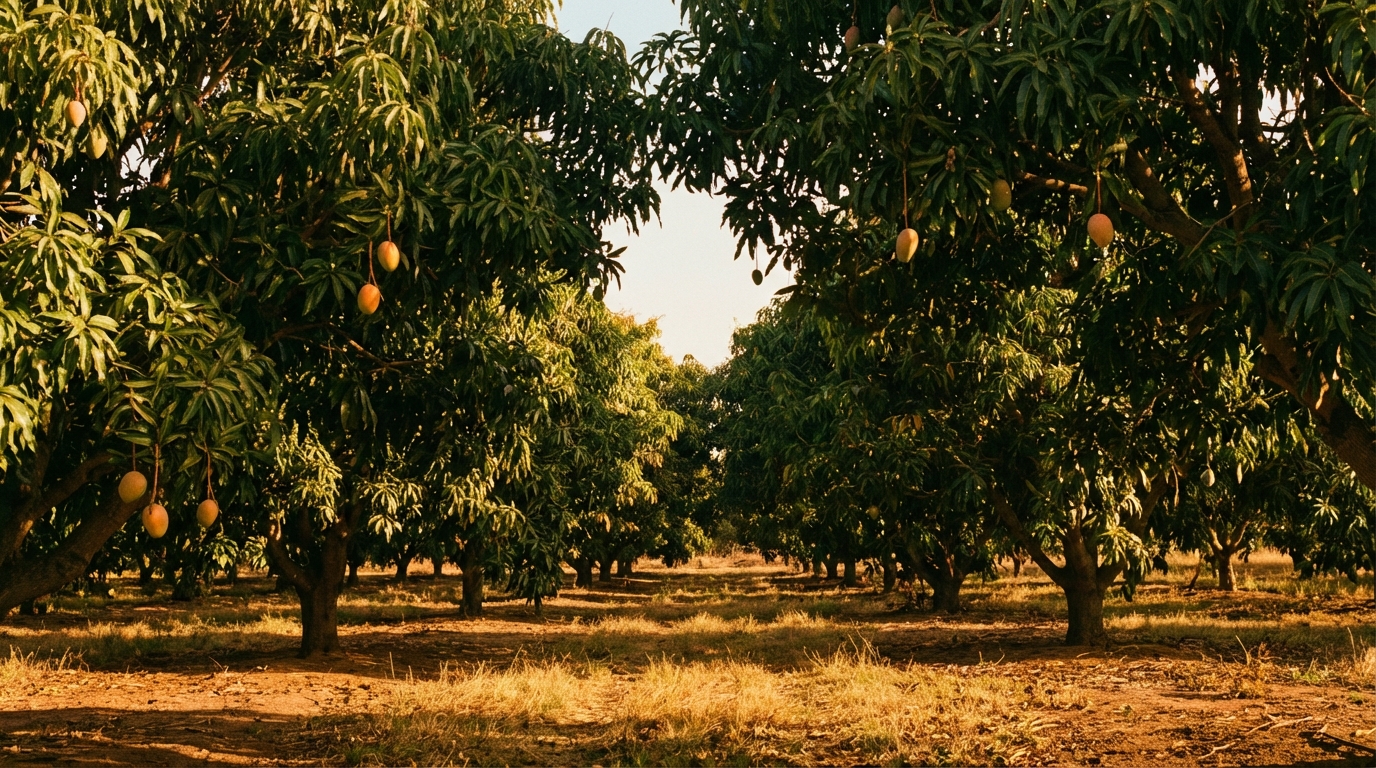
When a mango tree stops bearing fruit, it begins again.
The Beginning
Burn, or become.
Sonae (備え) — to prepare with care.
The mango wood we use comes from trees that have stopped bearing fruit. When those trees reach the end of their yielding years, they face two fates: burn, or become. Sonae is that becoming — shaped by hand, designed to outlast the person who holds it.
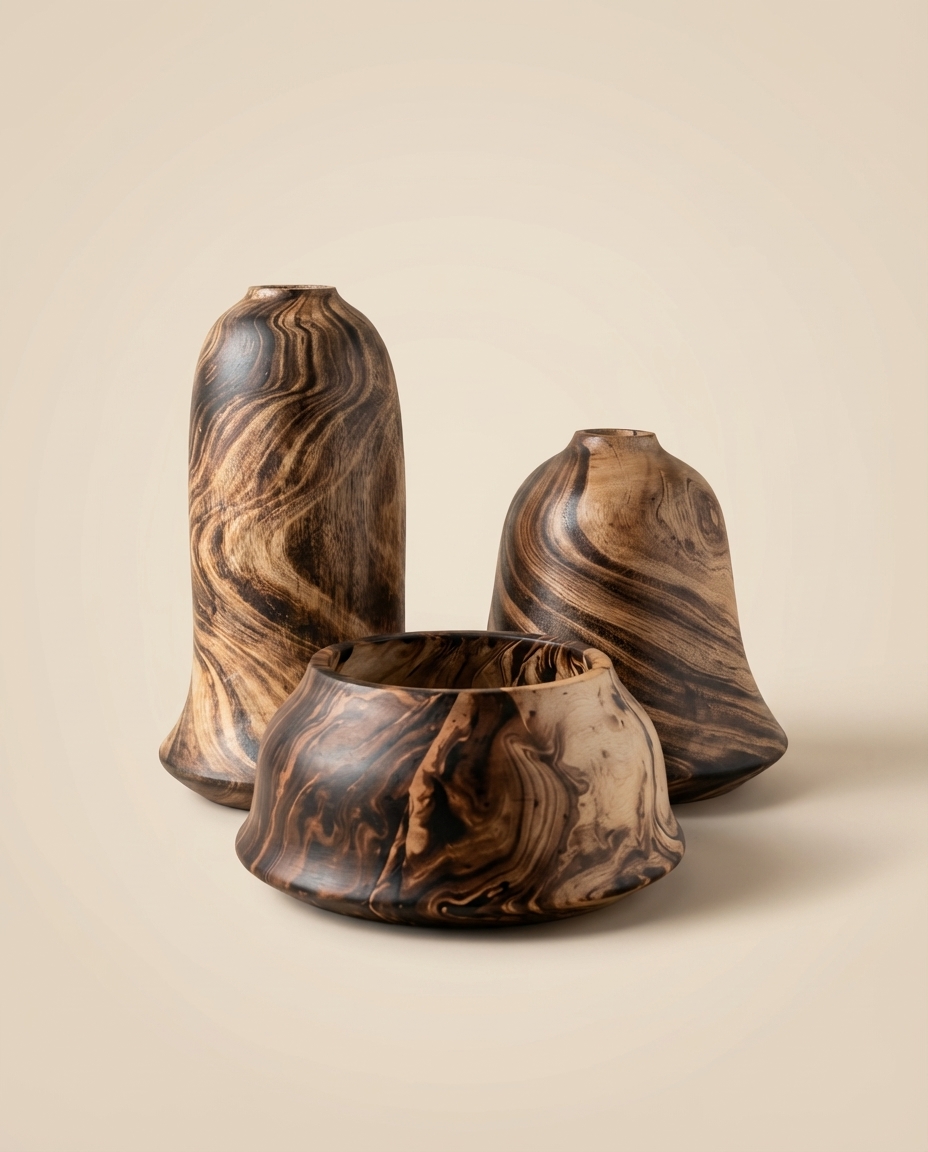
The heartwood is pale gold. The sapwood is dark chocolate brown. That contrast isn't engineered — it's the tree, honest about what it is. No two pieces are ever identical.
15–25
years bearing fruit before harvest
6–18
months air-drying after the cut
1
craftsman shapes each piece
0
CNC machines — shaped entirely by hand
The Journey
From tree to shelf
The Tree
A mango tree bears fruit for 15–25 years. When it stops, most are burned. Ours aren't.
The Harvest
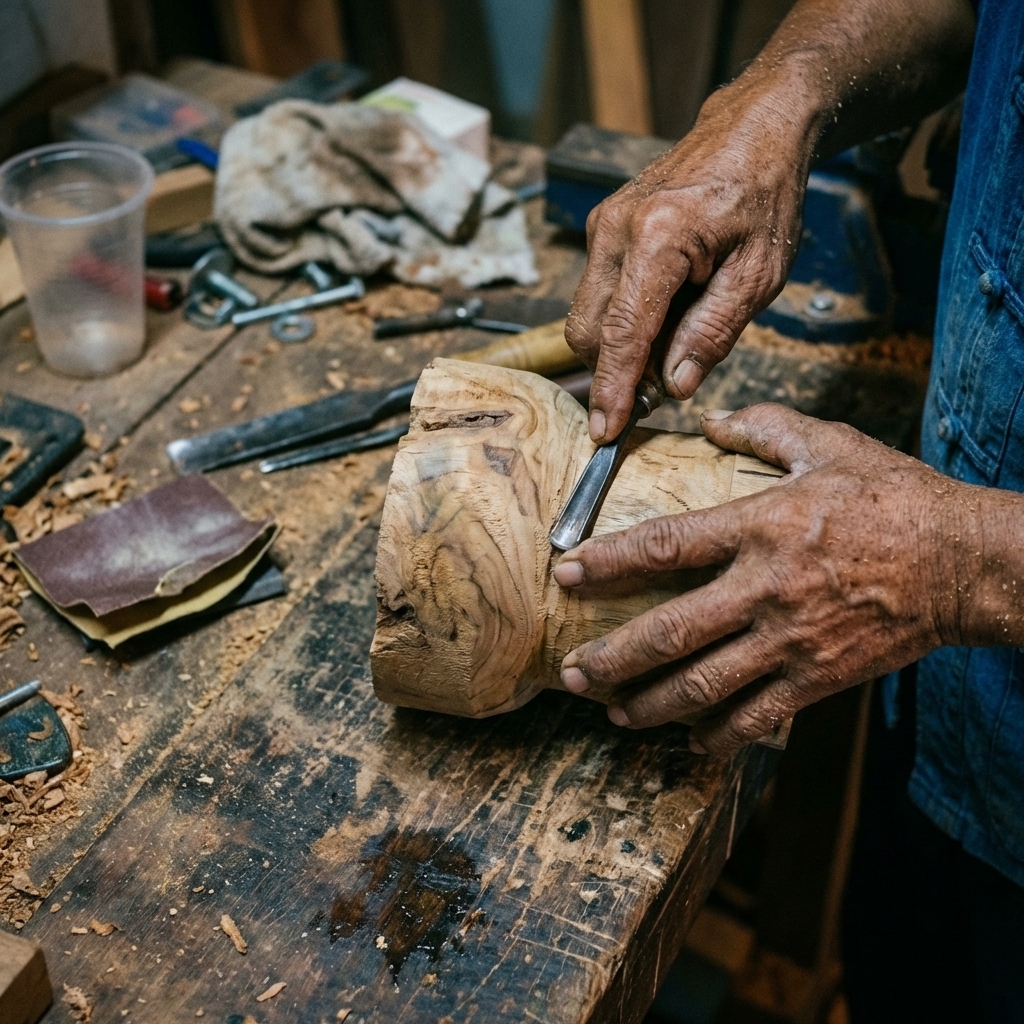
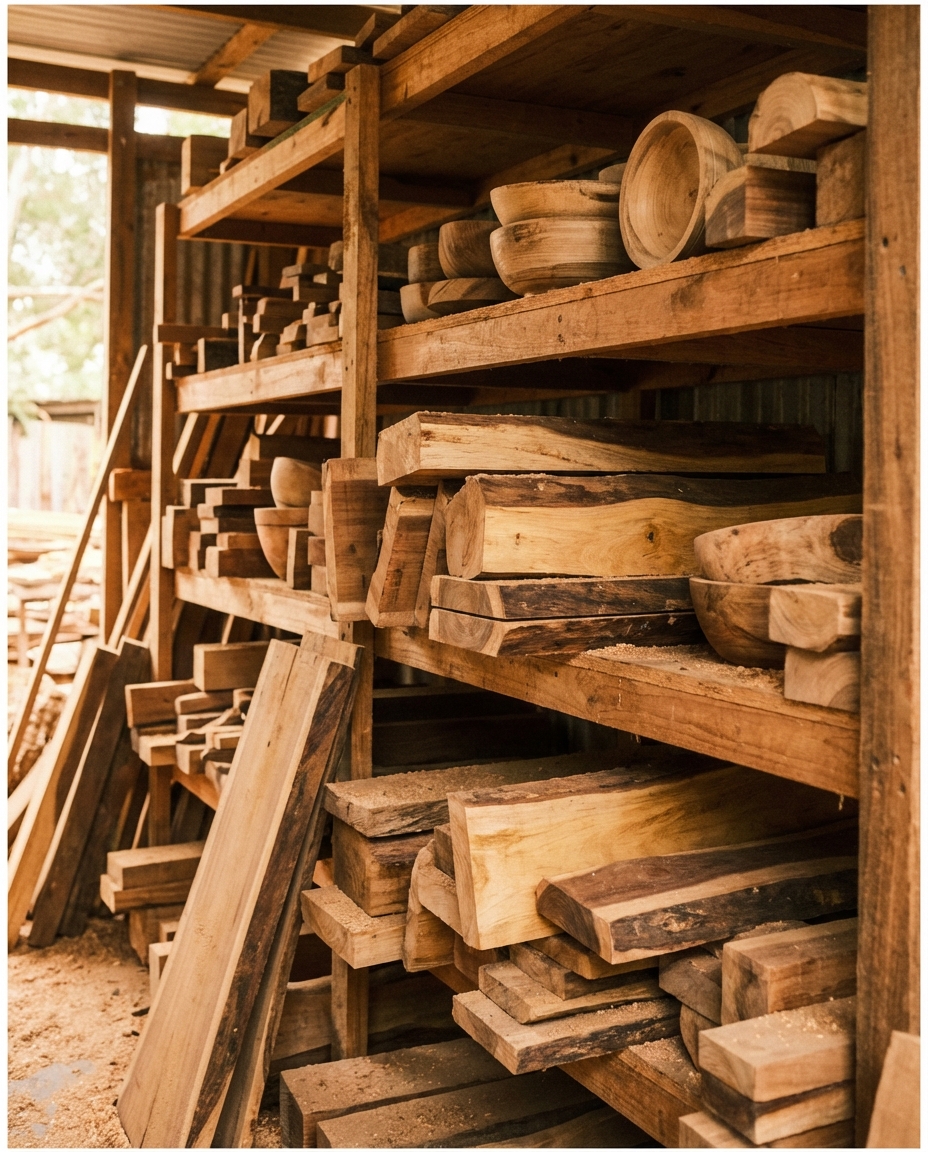
Felled by hand, rough-cut on-site with chainsaw and circular saw, then planked into usable timber.
Air Drying
Planks are stacked and air-dried for 6–18 months. Rushing this step cracks the wood. It cannot be rushed.
The Lathe
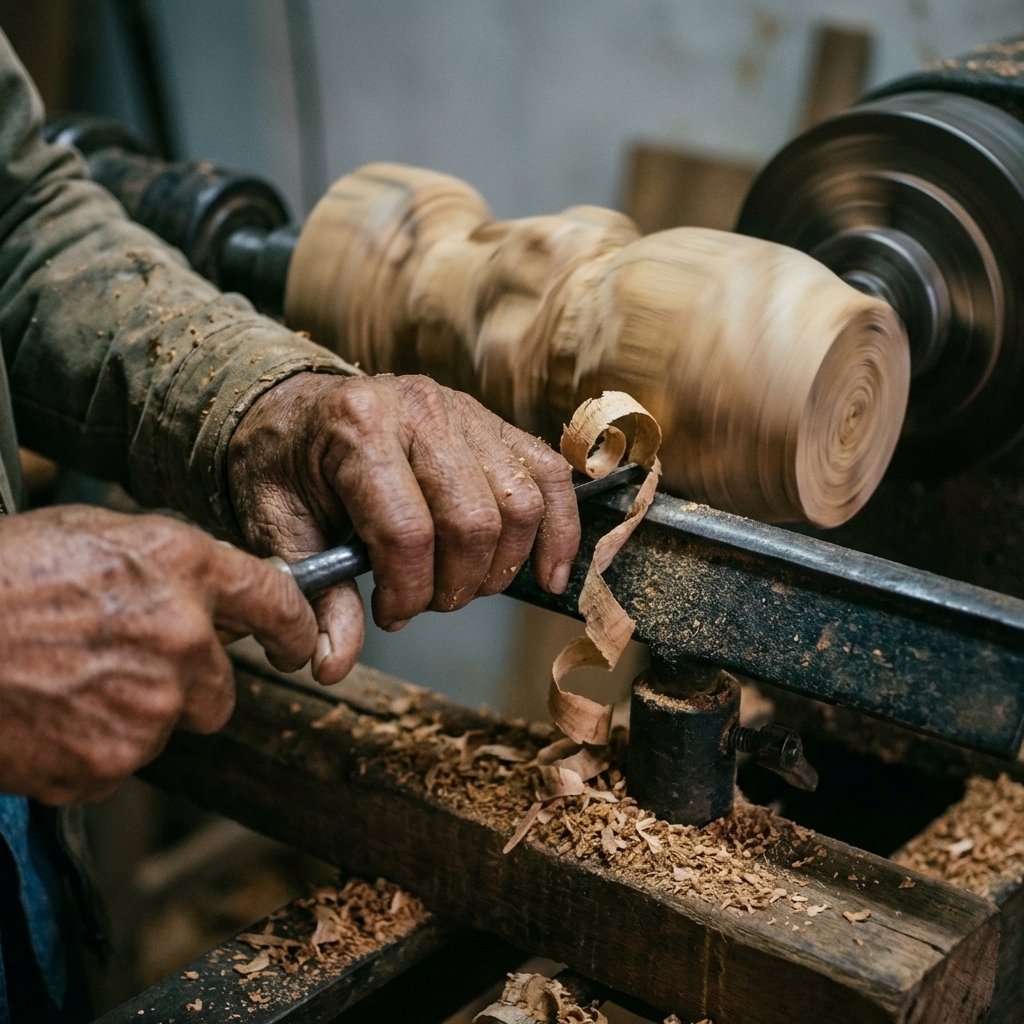
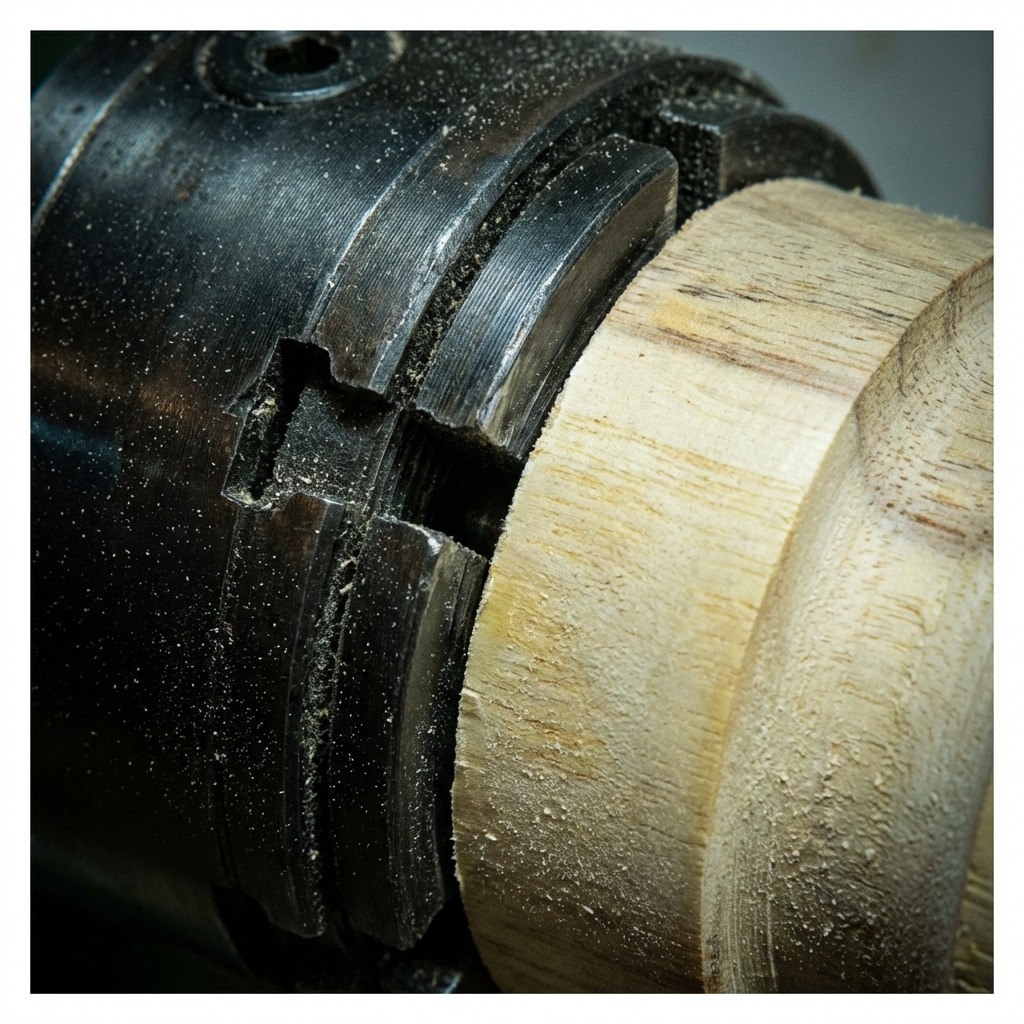
Vases and bowls are turned on foot-powered lathes — a traditional handcraft technique passed down across generations. The craftsman shapes by feel as much as by eye.
Chisel & Gouge
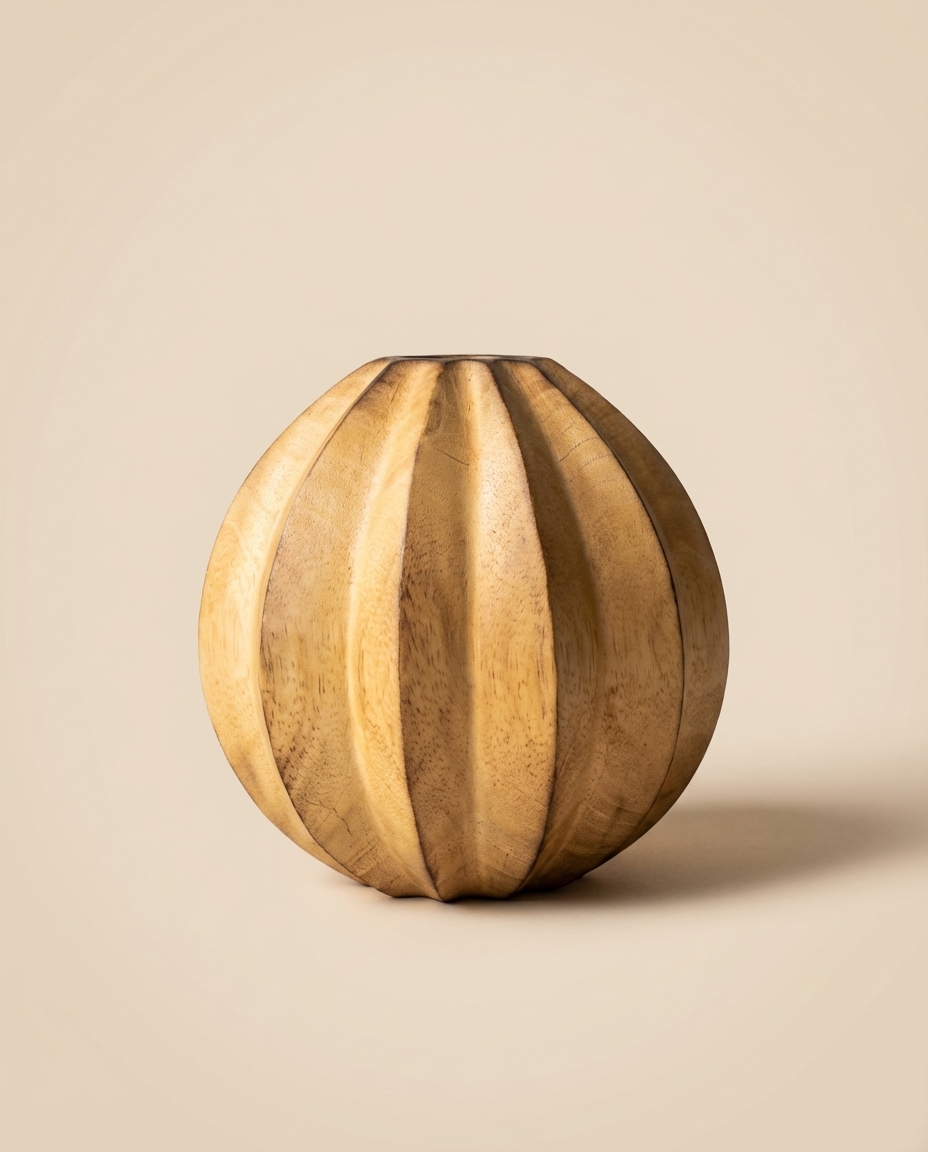
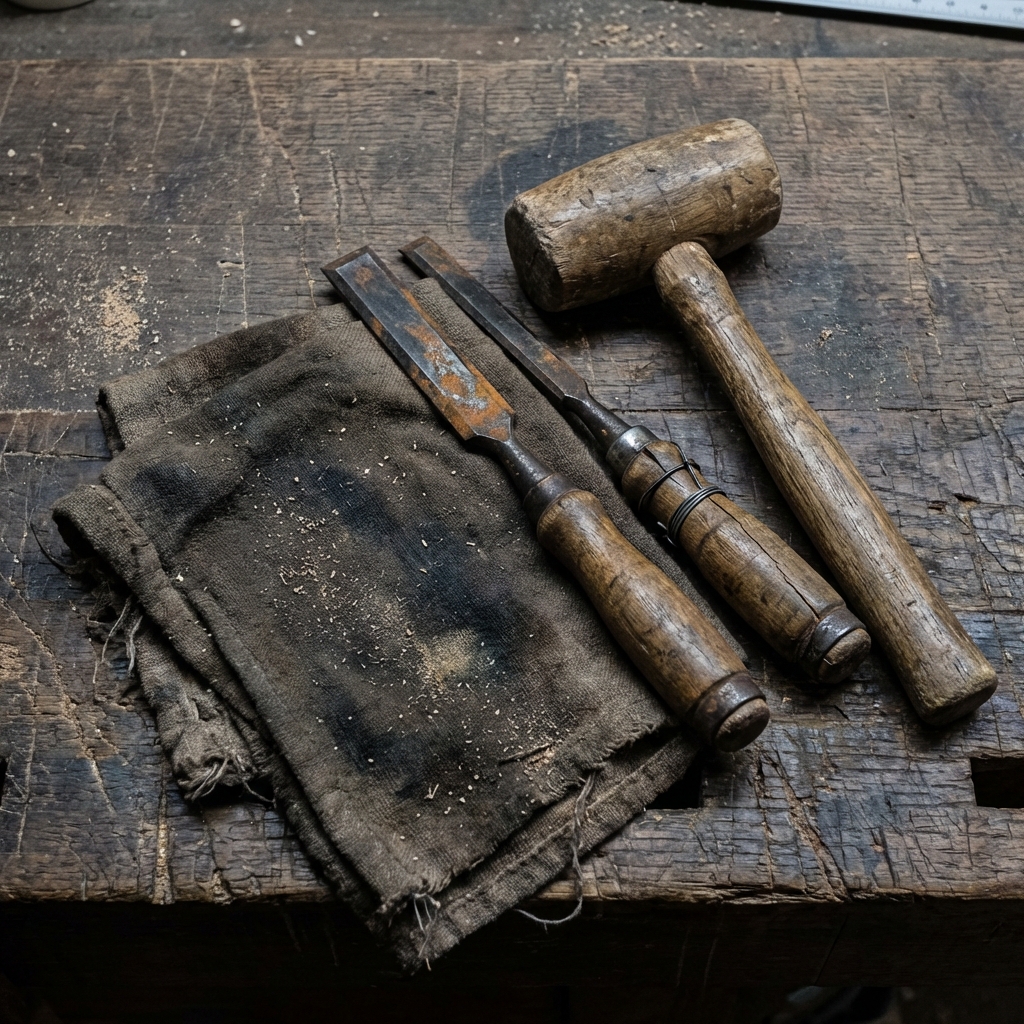
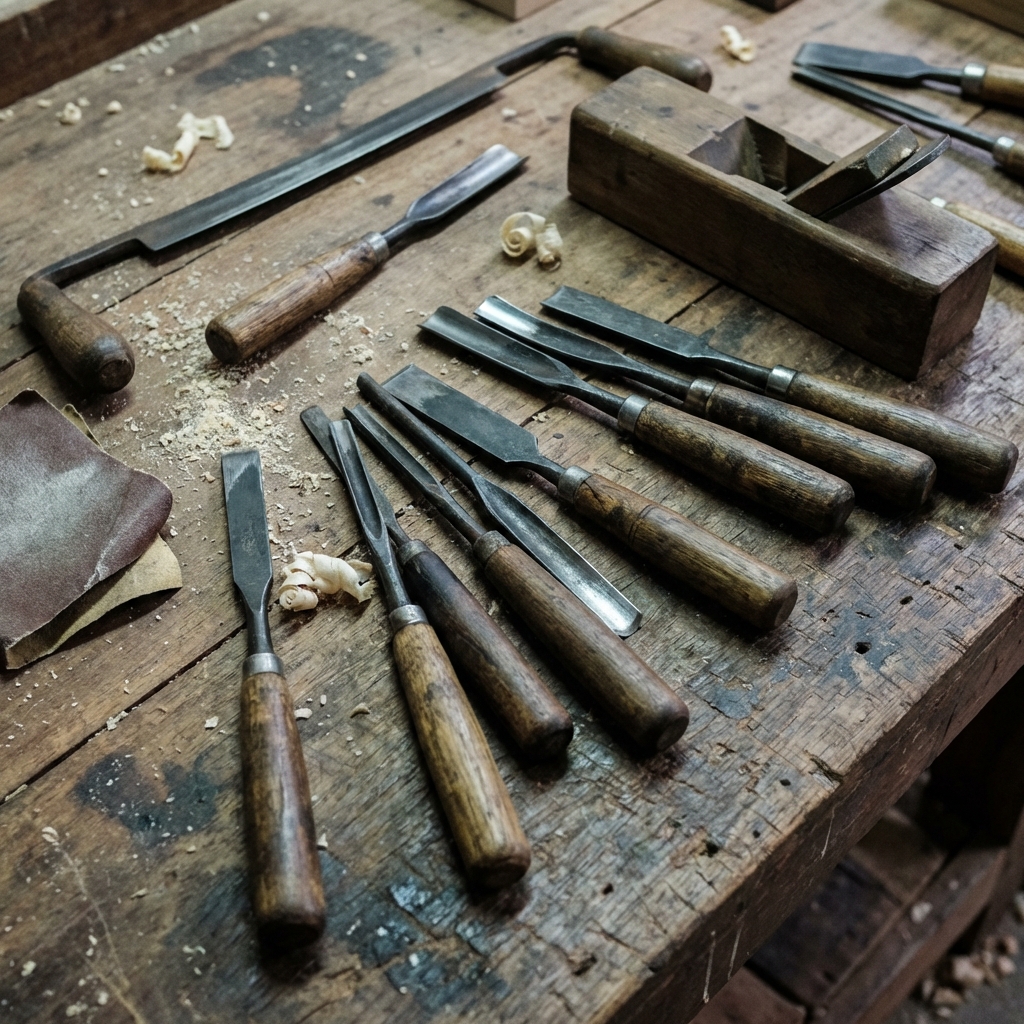
Patterns — waves, chevrons, ribbing — are cut with traditional chisels and gouges. No router templates. Every mark is made by hand.
The Finish
Sanded through grits, then finished — flame-charred, coffee-dipped, or sealed natural. The character of the piece is decided last.
The Craft
Four techniques. No two pieces alike.
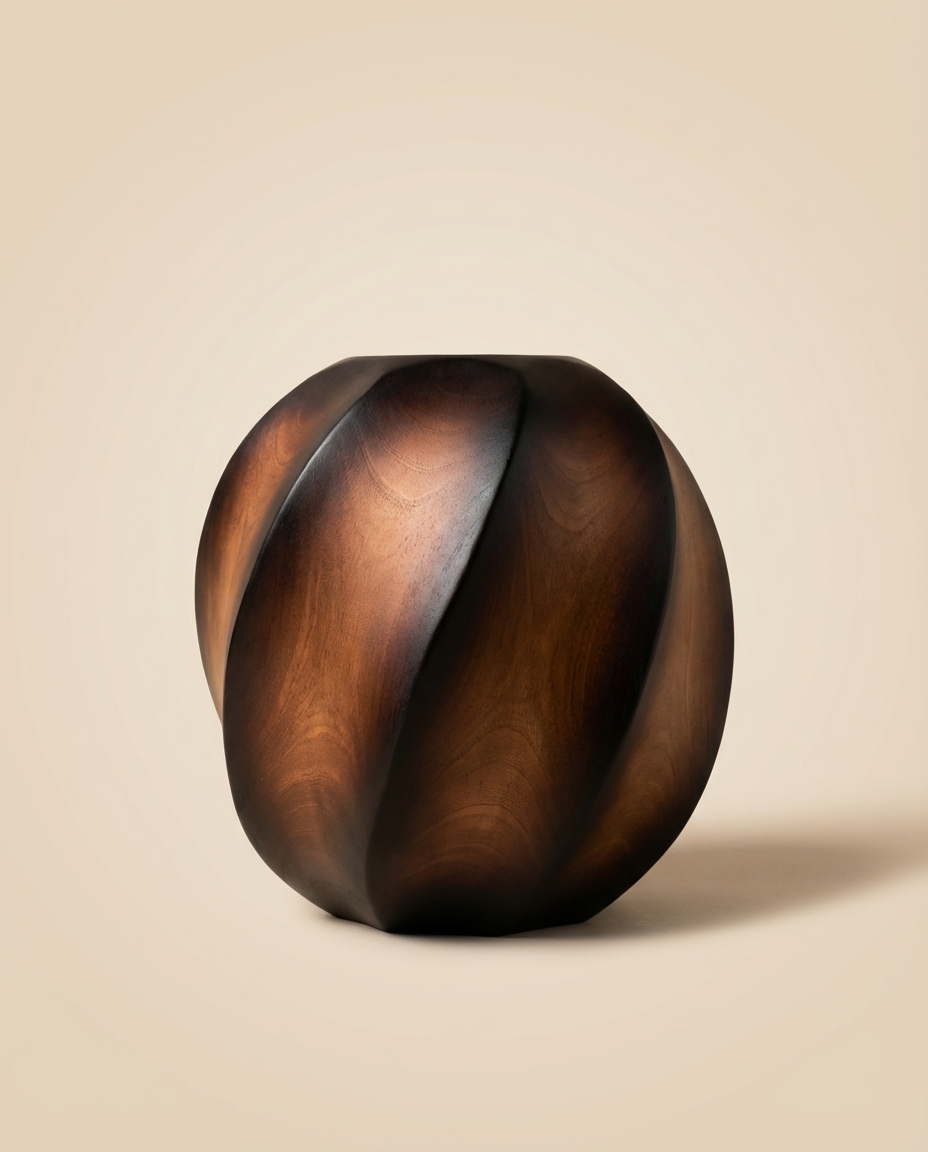
Flame Charring
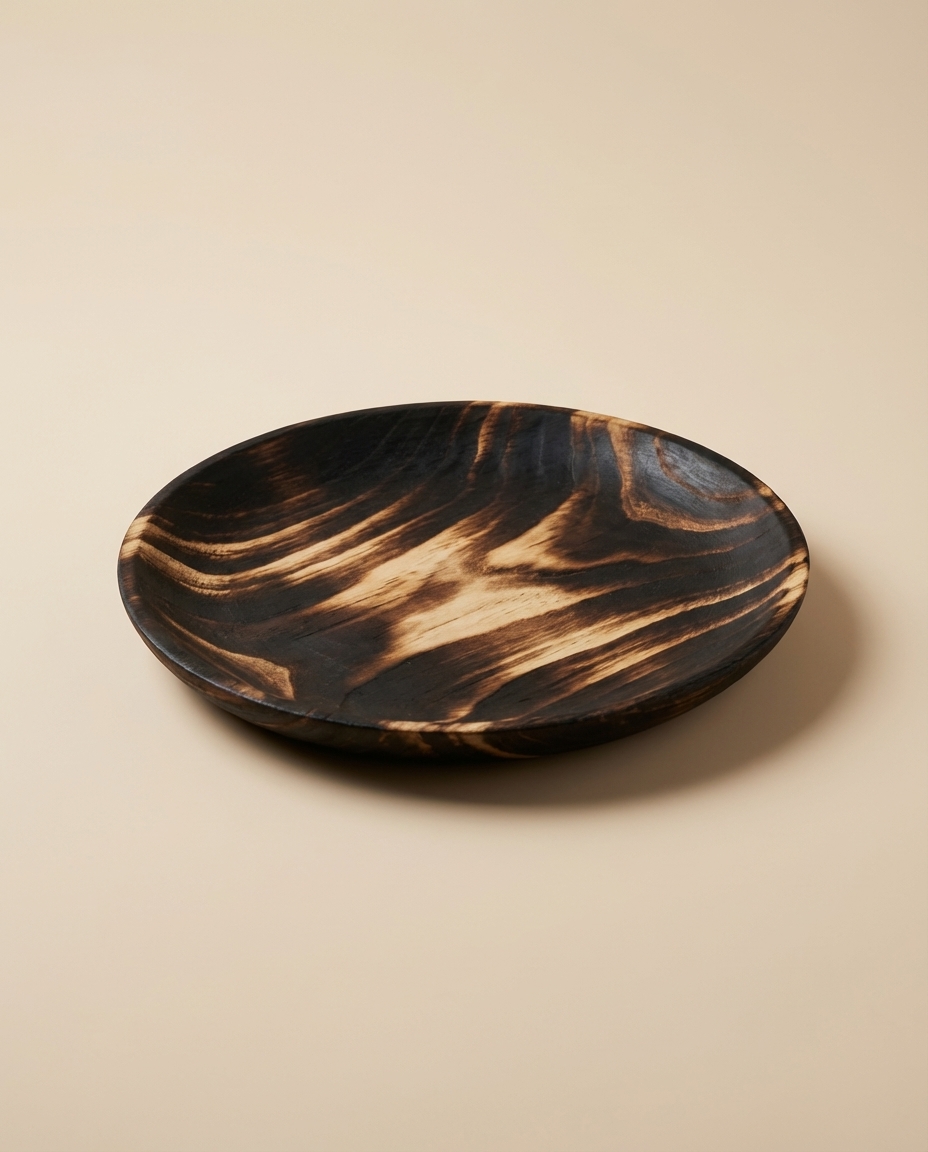
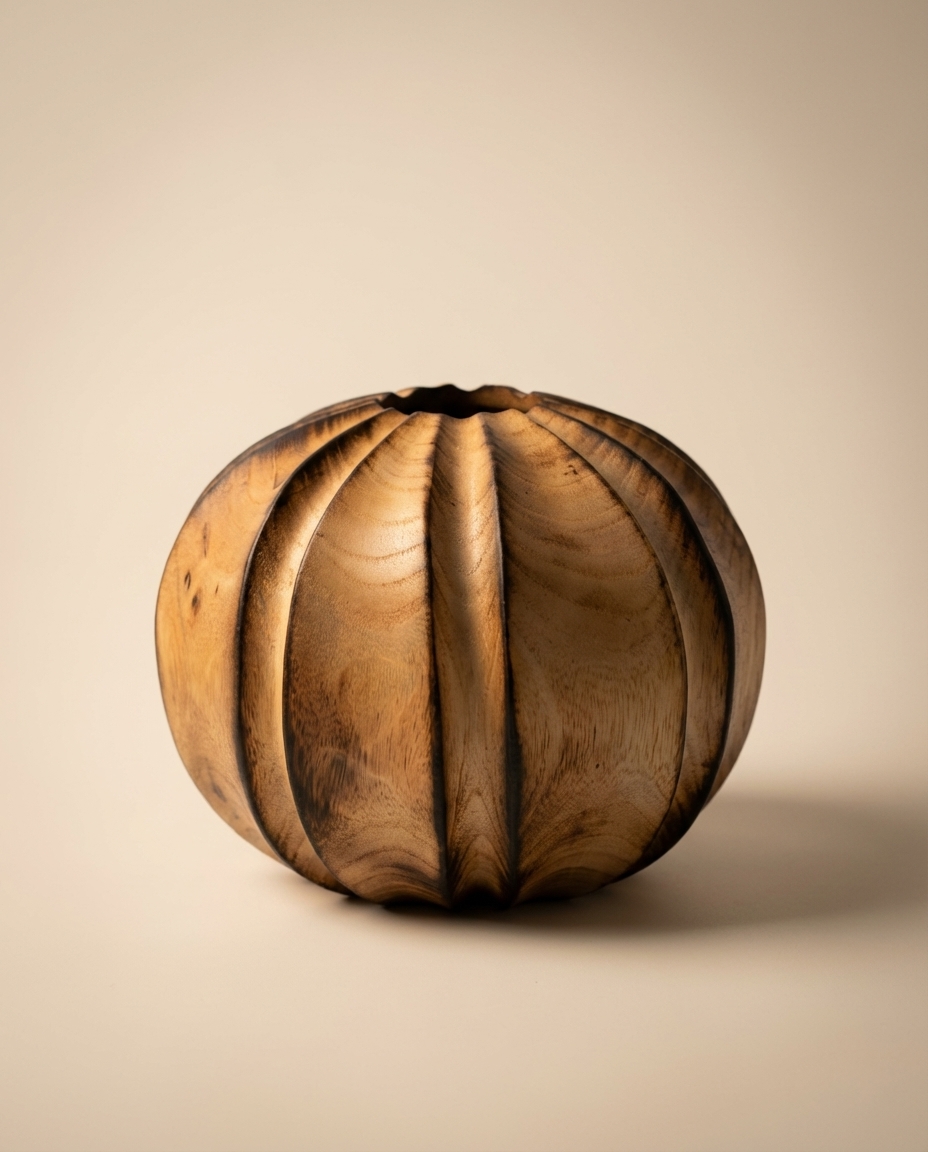
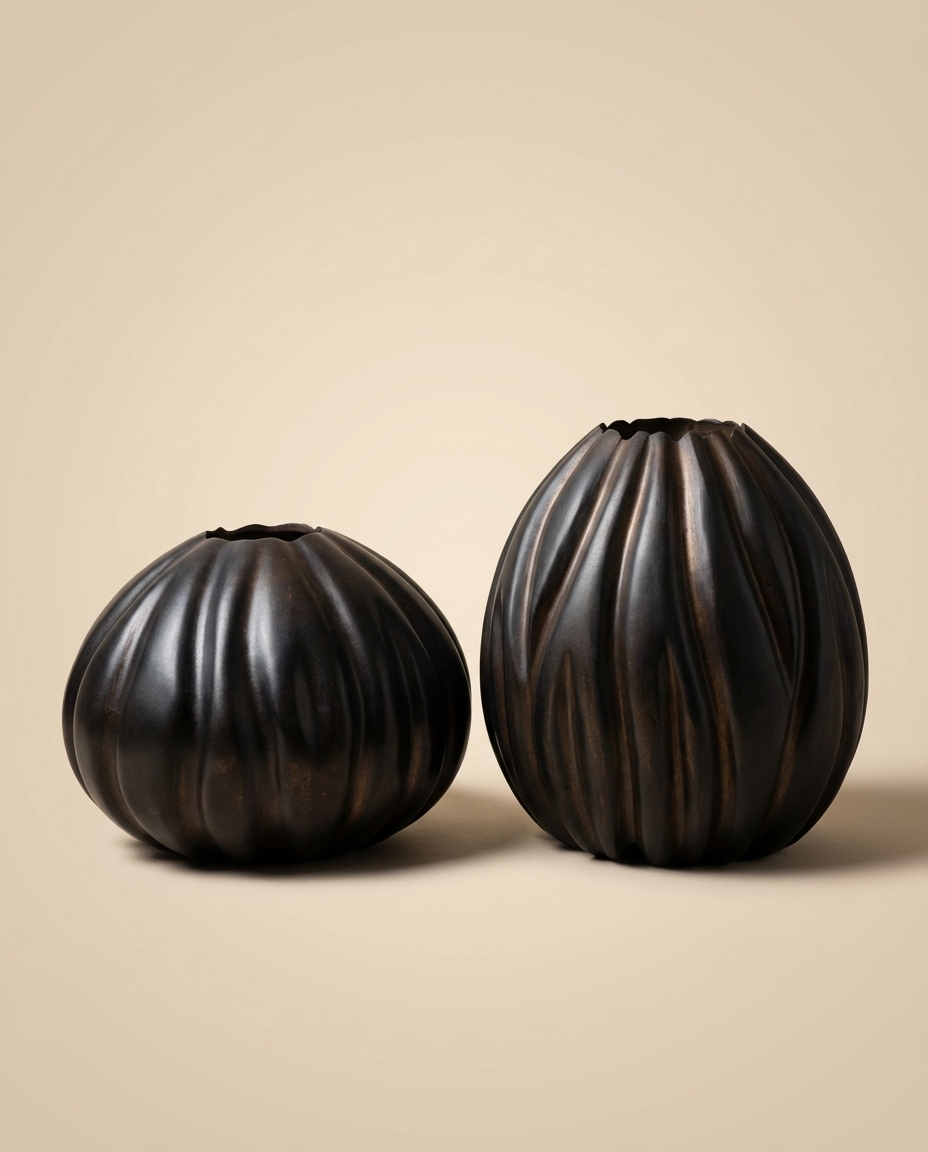
A hand torch chars the surface to near-black. The heat hardens the grain, deepens the pattern, and preserves the wood — shou sugi ban, an ancient Japanese technique.
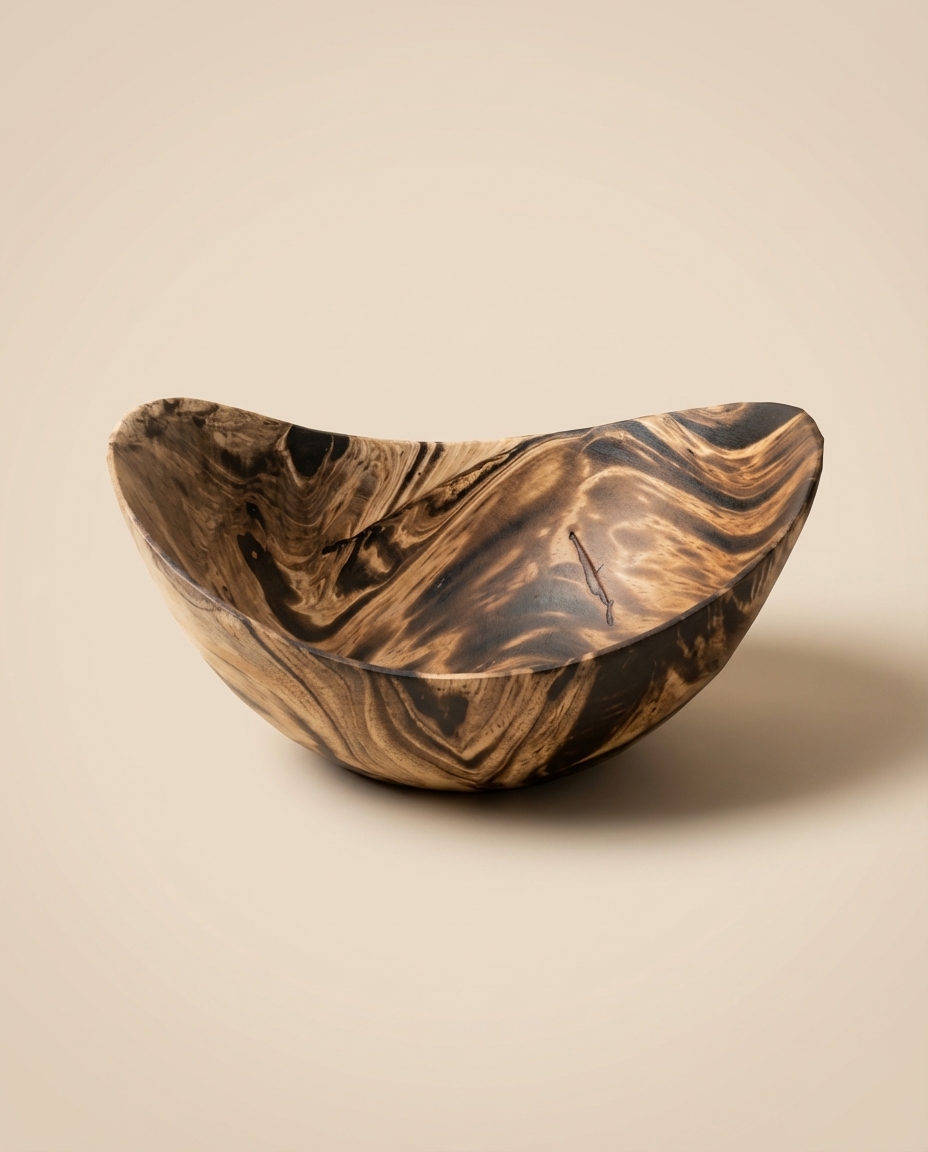
Coffee Dipping
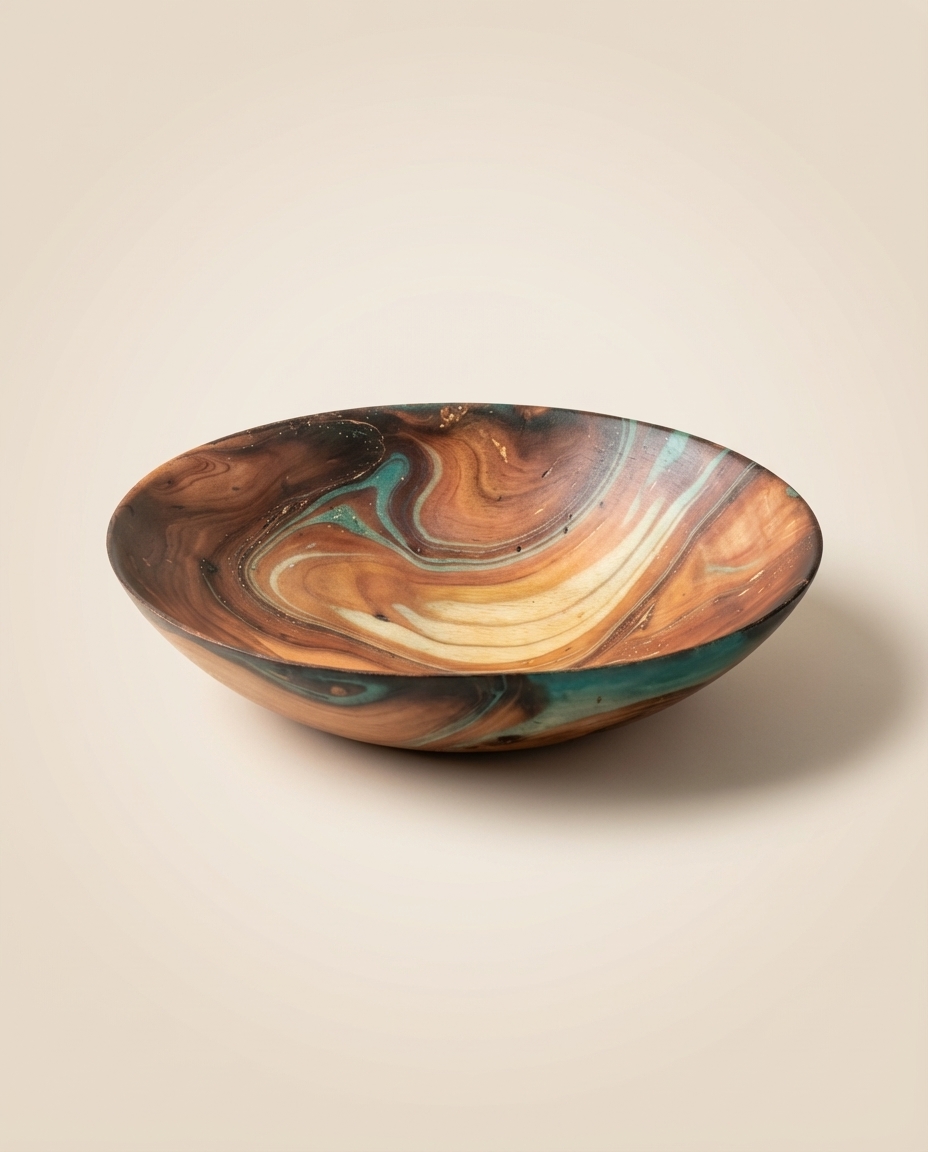
A warm gradient finish in deep espresso, earthy cocoa, and pale cream tones. Applied by hand in layers, the colour flows through the grain and settles differently on every piece — giving each one a unique depth.
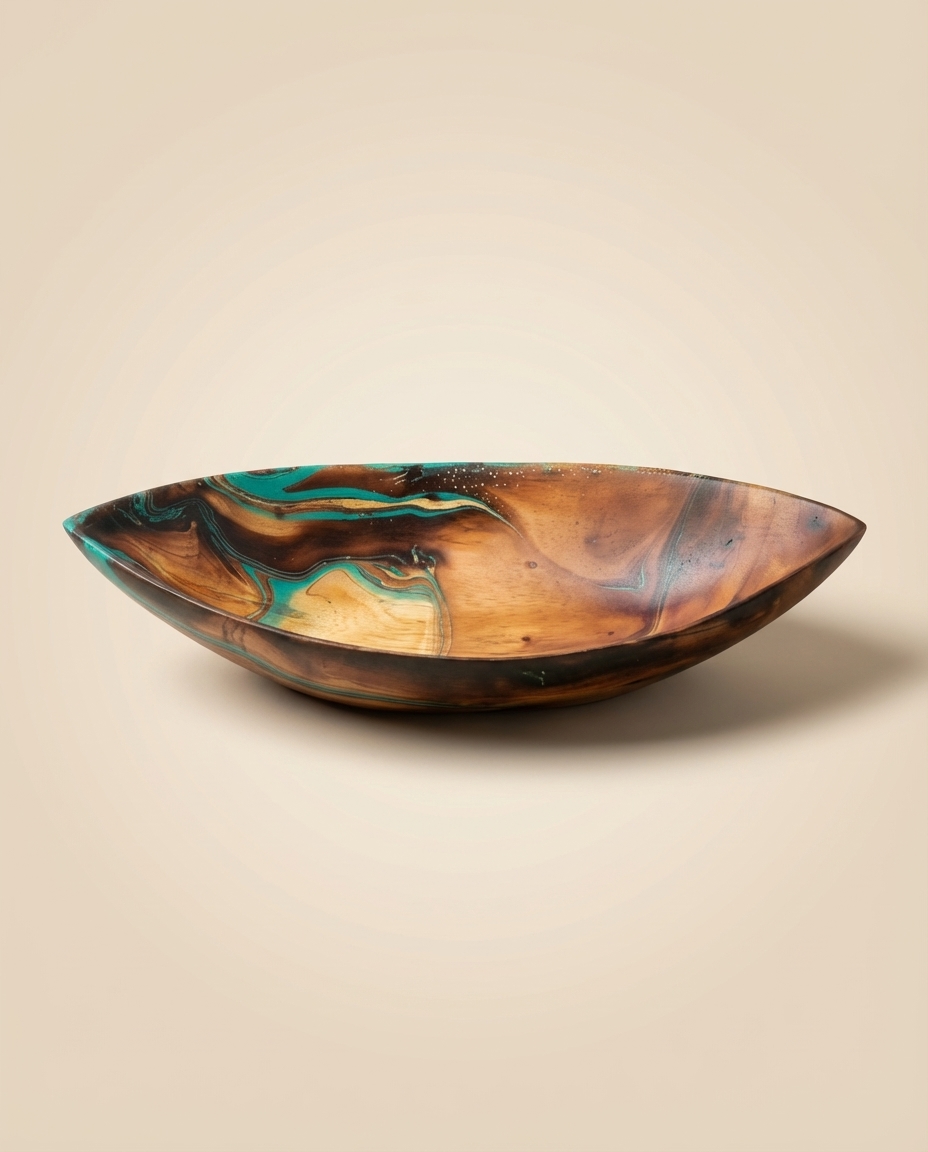
Turquoise Blue
A hand-applied colour that pools into the grain rather than sitting on top of it. The finish is deliberate but never uniform — each piece absorbs the pigment differently, shaped by the wood's own character.
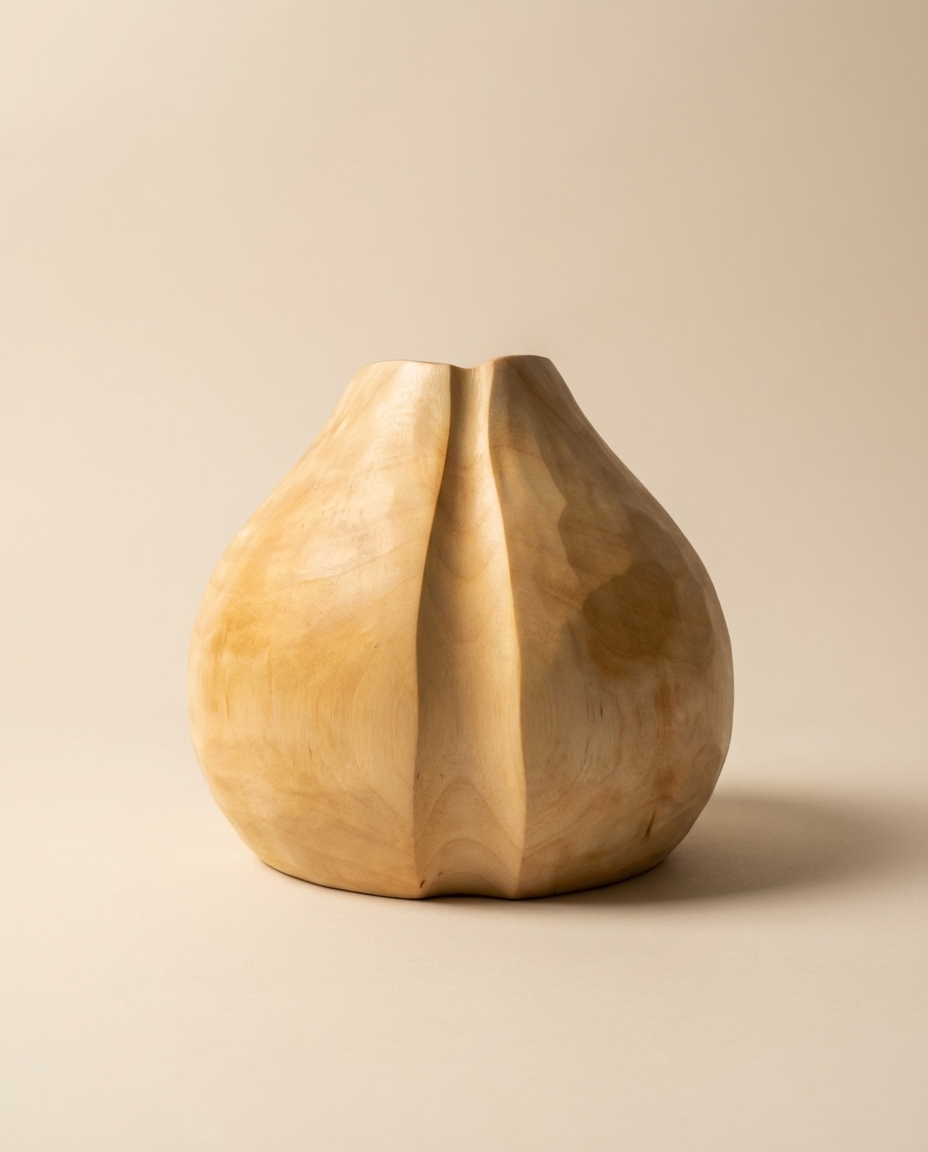
Hand Carving
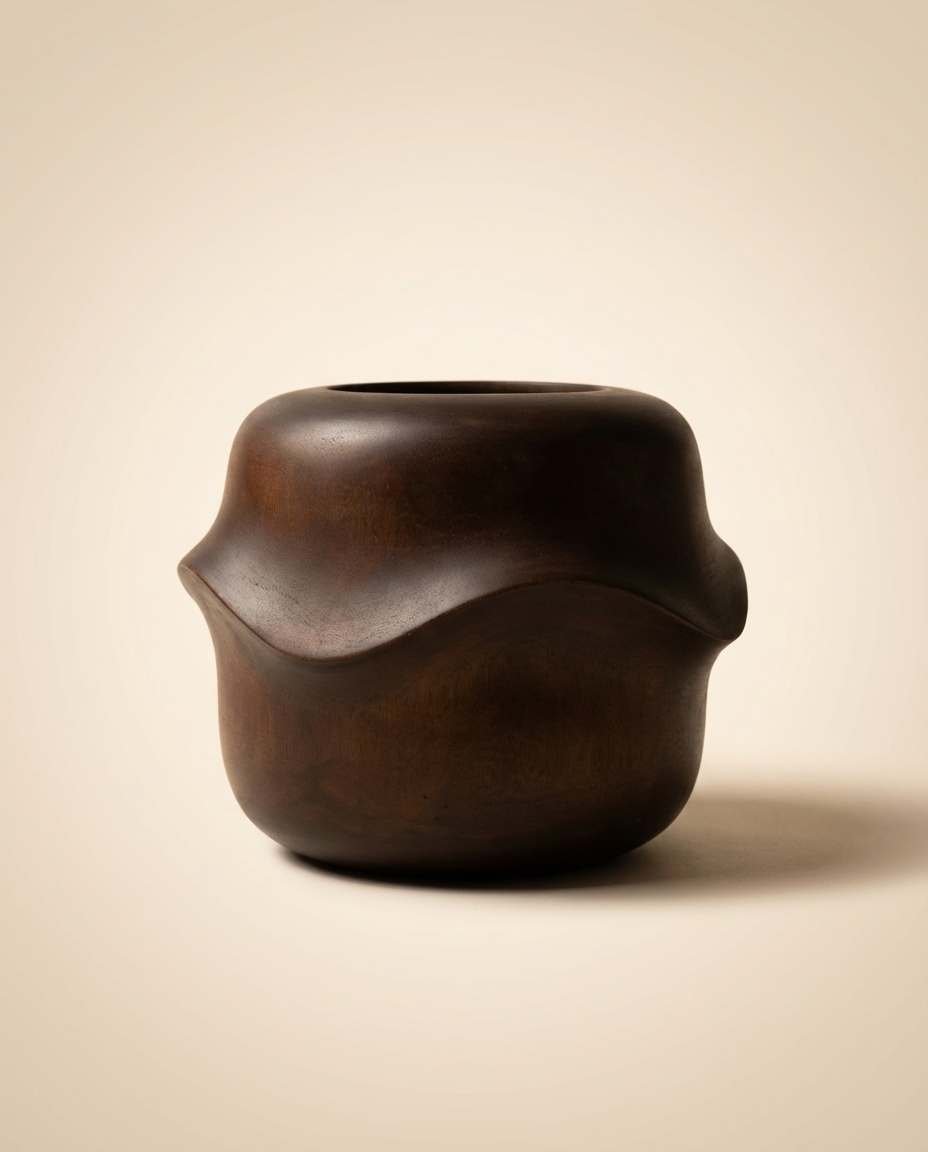
Spirals, waves, and geometric facets are cut with traditional chisels. Each pattern is deliberate but never mechanical — the hand always introduces variation.
The Craftsmen
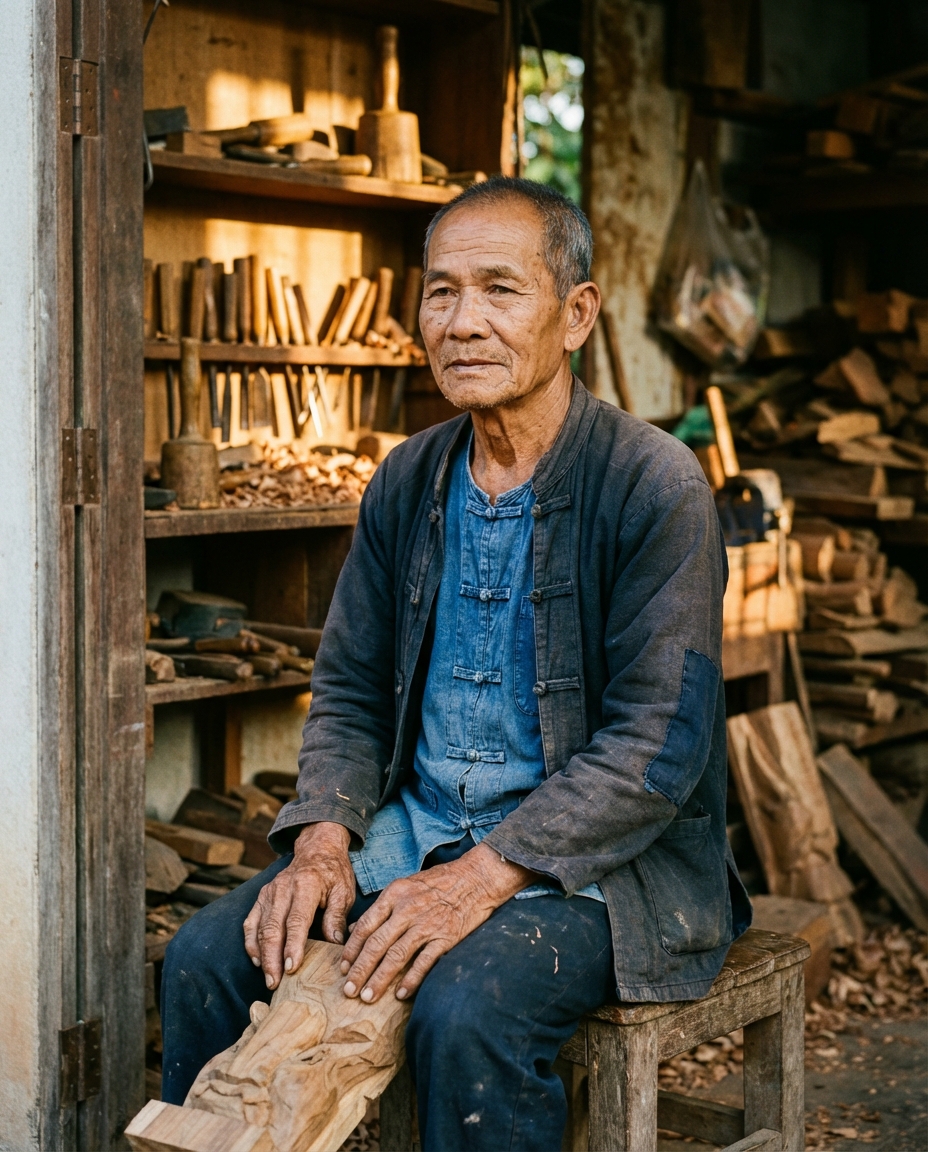
“Foot on the lathe, chisel in hand. He just knows when it's done.”
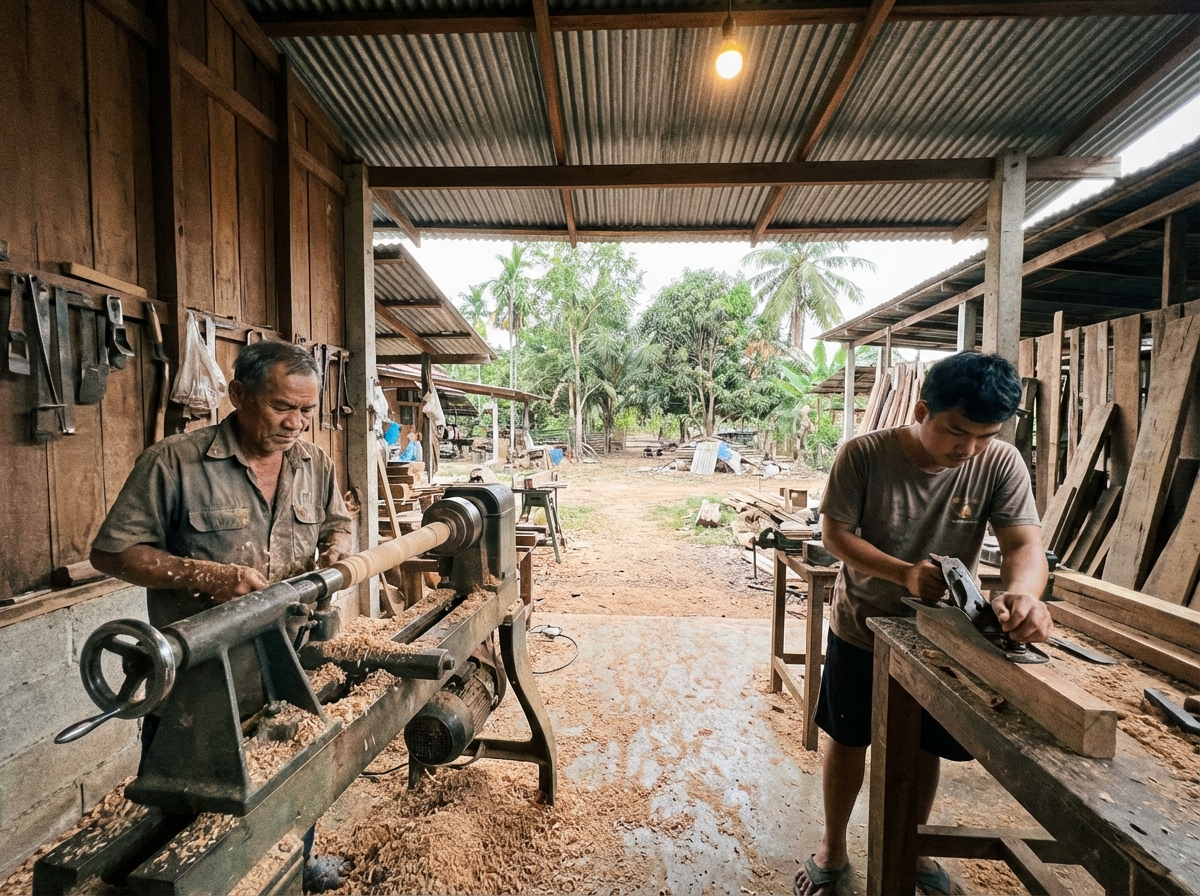
The workshops we work with are family businesses — fathers passing trade to sons, sons passing it to theirs. The techniques aren't taught from a manual. They're taught by hand, layer by layer.
The tools they use — foot lathes, various-profile chisels, gouges, drawknives — many are decades old. Not because they don't invest in equipment, but because good tools stay good. The consistency comes from the hand, not the machine.
In this community, craftsmen don't produce pieces — they make them. The distinction matters.
What We Believe
Our principles
Sustainability
Mango wood is a by-product of the fruit industry. When trees stop bearing fruit they are usually burned. We turn them into objects that outlast us — waste becomes legacy.
Our Makers
Our workshops employ local craftspeople — fair wages, long-term commitment, real skills passed down through generations. The craft is the product.
Universal Beauty
A piece shaped by hand in Thailand can live in a home in London, Seoul, or Sydney. That journey — from harvest to hearth — is part of what you own.
The Community
Follow the craft.
Every piece that leaves the workshop has a story. Follow us to see where they end up.